Why Glaucoma Often Goes Undetected Until It’s Too Late

One of the most alarming truths about glaucoma is that most people don’t realise they have it until permanent vision loss has already begun. Unlike many eye conditions, glaucoma develops silently. There is usually no pain, no obvious redness, and no early warning sign that something is wrong.
By the time noticeable symptoms appear, significant damage to the optic nerve may have already occurred, damage that cannot be reversed. This is why glaucoma is often called the “silent thief of sight.” If you don’t want to be among those who discover the condition too late, understanding the importance of regular glaucoma screening is the first and most important step.
This blog is for anyone who wants to protect their vision before it’s compromised, not after.
Table of Contents
Why Regular Glaucoma Screening Is Essential (Even Without Symptoms)
Many people assume that if their vision feels normal, their eyes must be healthy. Unfortunately, glaucoma doesn’t work that way. The disease often starts by affecting peripheral vision, which the brain compensates for, making vision loss difficult to notice in daily life.
Regular glaucoma screening allows specialists to detect subtle changes in eye pressure, optic nerve health, and visual fields long before vision loss becomes noticeable. This is where the early detection of glaucoma can make a life-changing difference.
If left undetected, glaucoma can progress quietly over the years. If identified early, however, its progression can often be slowed or controlled with timely treatment and monitoring.
For individuals living in and around the region, consistent glaucoma screening in Mangalore at a trusted eye hospital ensures that potential risks are identified early, even when everything seems perfectly fine.
What Happens During a Glaucoma Eye Test at Prasad Netralaya?
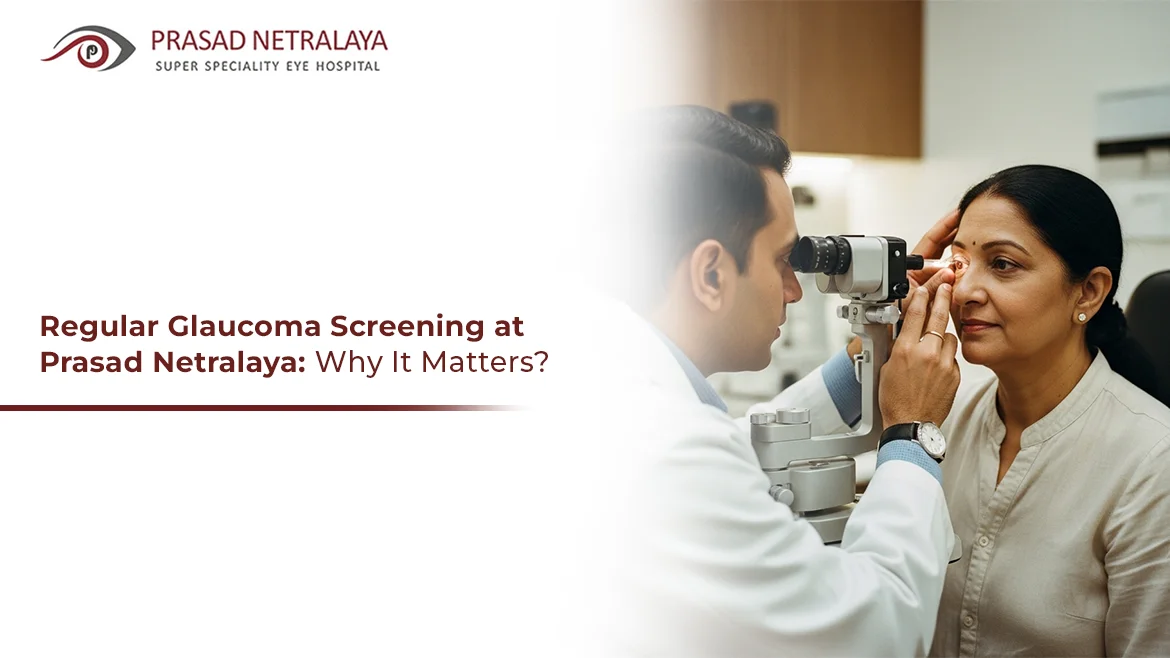
At Prasad Netralaya, glaucoma screening is designed to be thorough, accurate, and completely patient-friendly. The process is painless, non-invasive, and tailored to assess every aspect of eye health related to glaucoma.
During a glaucoma eye test, specialists may perform:
- Intraocular pressure measurement (Tonometry) to assess eye pressure levels
- Optic nerve evaluation and imaging to detect early structural damage
- Visual field testing to check for subtle peripheral vision loss
- Corneal thickness measurement (Pachymetry), which influences pressure readings
- Drainage angle examination (Gonioscopy) to identify the type of glaucoma
- RNFL scanning to detect early nerve fibre loss
Using advanced diagnostic technology and expert clinical judgment, Prasad Netralaya ensures that glaucoma screening is not just about identifying the condition — but about understanding its stage, risks, and the most appropriate next steps for each patient.
Early, accurate screening allows for personalised care plans that help preserve vision for the long term.
Also read: Glaucoma Surgery Recovery: What Patients Should Expect?
Types of Glaucoma Identified Through Screening
Glaucoma screening is not just about confirming whether the condition exists, it also helps identify which type of glaucoma is present, as each behaves differently and requires a tailored management approach.
1. Primary Open-Angle Glaucoma
The most common form, this type develops slowly and painlessly over time. Vision loss usually begins at the periphery and progresses inward. Without regular screening, many patients remain unaware until advanced stages, when damage becomes permanent.
2. Angle-Closure Glaucoma
This form can develop suddenly and is considered a medical emergency. A rapid rise in eye pressure may cause severe eye pain, headaches, nausea, blurred vision, or halos around lights. Early identification through screening can help prevent sudden vision-threatening episodes.
3. Normal-Tension Glaucoma
In this type, optic nerve damage occurs even when eye pressure remains within normal ranges. Because pressure readings may appear normal, detailed optic nerve evaluation during glaucoma screening becomes especially important.
4. Congenital Glaucoma
A rare form seen in infants and young children, congenital glaucoma is often identified through early eye examinations. Prompt diagnosis and treatment are critical to preserving vision during crucial developmental years.
Each type of glaucoma can lead to irreversible vision loss if left unmanaged, making regular screening essential for timely intervention and long-term eye health.
Trusted Glaucoma Screening in Mangalore, Focused on Protecting What Matters Most
Glaucoma often progresses quietly, without pain or early warning signs, which is why regular glaucoma screening plays such a vital role in preserving long-term vision. A timely glaucoma eye test can detect subtle changes early, helping prevent irreversible damage before it impacts daily life.
At Prasad Netralaya, glaucoma screening in Mangalore is guided by experience, advanced diagnostics, and a deep understanding of how valuable your eyesight truly is. Every evaluation is careful, personalised, and focused on what’s best for your eyes, not just today, but for years to come.
If it’s been a while since your last eye check, this is your sign. Schedule a glaucoma screening at Prasad Netralaya and take care of your eyes the right way.
Frequently Asked Questions
1. How often should glaucoma screening be done?
For adults over 40, glaucoma screening is usually recommended once every 1–2 years. Those with higher risk factors, such as a family history, diabetes, or high eye pressure, may need more frequent screening as advised by an eye specialist.
2. How can glaucoma be prevented from worsening?
While glaucoma cannot be cured, its progression can be controlled with early diagnosis, regular monitoring, and proper treatment. Following prescribed medications, attending follow-up visits, and getting timely glaucoma eye tests are key to protecting vision.
3. Can glaucoma be detected before vision loss begins?
Yes. Glaucoma often damages the optic nerve long before symptoms appear. Regular glaucoma screening can detect early changes, allowing treatment to start before vision loss occurs.
4. Is glaucoma screening painful or uncomfortable?
No. Most glaucoma screening tests are quick, painless, and non-invasive. Patients usually experience little to no discomfort during a glaucoma eye test.
5. Who is at higher risk of developing glaucoma?
People over 40, those with a family history of glaucoma, diabetes, high blood pressure, or prolonged steroid use are at higher risk. Regular screening is especially important for these individuals.

Dr. Vikram Jain, M.S. had his medical training (MBBS) from Kasturba Medical College, Mangalore, India. He did his master’s in Ophthalmic surgery from Kasturba Medical College, Manipal. He currently manages the Glaucoma department of Prasad Netralaya hospital.